

Online Perception
Strategy & Control

Why Visibility Doesn't Guarantee Selection: The AI Perception War

Overview

Introduction: The Visibility Trap
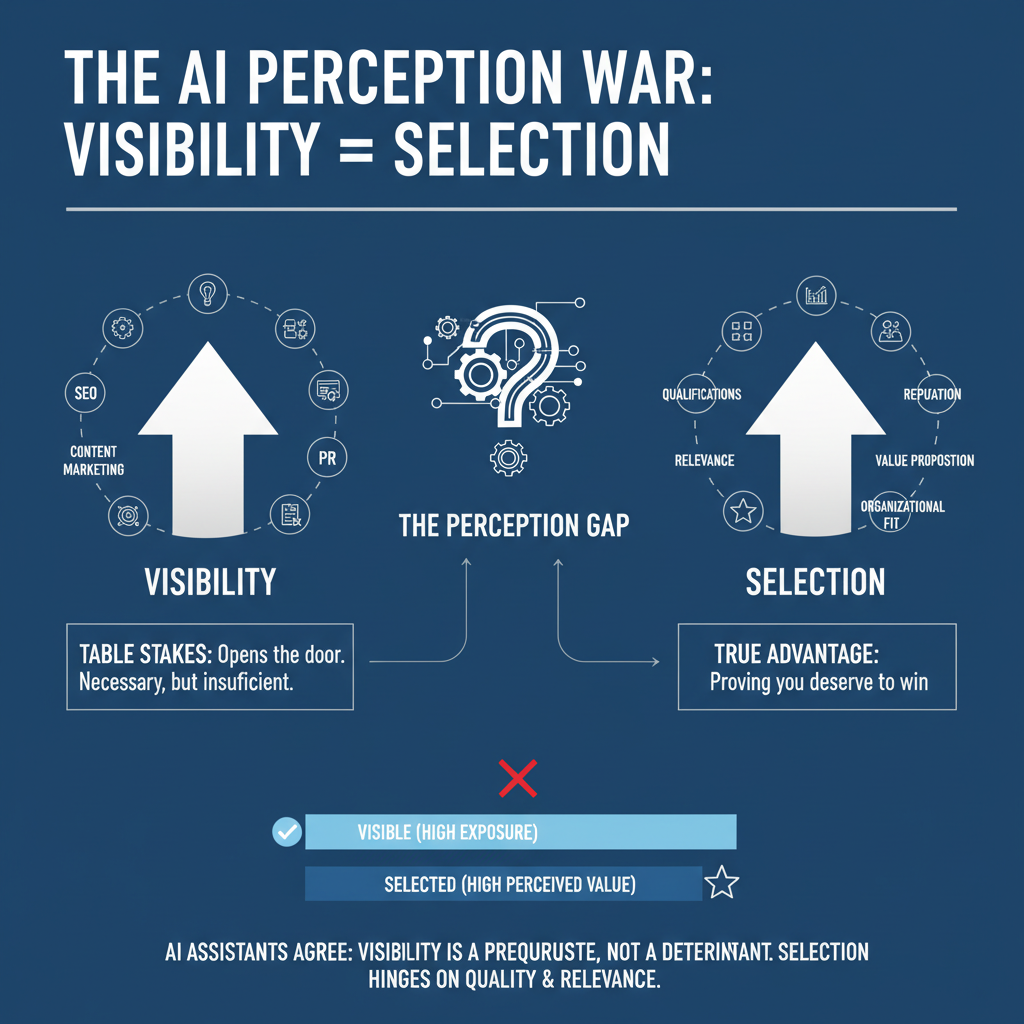
Every executive has heard the mantra: get visible or get left behind. Companies invest millions in SEO, thought leadership, and digital presence, only to watch competitors with smaller footprints win the deals. The uncomfortable truth is that visibility has become table stakes, not a competitive advantage. In 2024, organizations discover that being seen and being selected operate on entirely different axes. This article unpacks the perception gap between exposure and choice, examines what AI assistants emphasize when discussing selection, identifies the narrative blind spots, and predicts how the visibility-to-selection dynamic will evolve. The core insight: visibility creates the opportunity to compete; selection requires proving you deserve to win.
Infographic

How ChatGPT and Gemini Represent This Topic

EngineToneFramingKey Risk / Opportunity
ChatGPTBALANCEDThe topic is often framed around the idea that while visibility can enhance a candidate's chances, it does not ensure selection due to various factors such as qualifications, biases, and organizational fit. Emphasis is placed on the complexity of the selection process and the interplay of multiple criteria.Key Risk: A key risk is that candidates may overestimate their chances based on visibility alone, leading to disappointment and disengagement when they are not selected. Opportunity: The opportunity lies in recognizing that increased visibility can still improve networking and learning opportunities, which can be beneficial for future selections or career advancements.
GeminiBALANCEDThe topic is typically framed as a crucial insight for anyone trying to get chosen, whether for a job, a product, or an idea. It emphasizes that while visibility is a prerequisite, factors like quality, relevance, reputation, and perceived value are often the true differentiators that lead to selection. It corrects the common misconception that mere exposure is,

How AI Assistants Frame Visibility and Selection

When asked about why visibility doesn't guarantee selection, both ChatGPT and Gemini adopt balanced tones, framing visibility as a prerequisite rather than a determinant. ChatGPT emphasizes the complexity of selection processes, qualifications, organizational fit, unconscious biases, and warns that candidates or vendors often overestimate their chances based on exposure alone. The assistant frames visibility as opening doors but highlights that multiple criteria determine who walks through them. Gemini similarly positions visibility as necessary but insufficient, stressing that quality, relevance, reputation, and perceived value act as true differentiators. Both models correct the common misconception that mere exposure translates to choice, yet neither deeply explores how organizations systematically evaluate perceived value or how competitors manipulate the selection layer independent of visibility. The AI framing is accurate but stops short of revealing the strategic mechanics behind selection, leaving a gap between knowing visibility isn't enough and understanding what actually drives the decision.

Who Controls the Narrative Around Selection

The narrative around visibility versus selection is dominated by marketing technology vendors, SEO consultancies, and digital agencies, all of whom profit from the visibility arms race. Platforms like HubSpot and research firms such as Gartner publish studies emphasizing reach, impressions, and share of voice as leading indicators of success. Meanwhile, procurement professionals and Harvard Business Review contributors quietly document that enterprise buyers evaluate vendors on risk mitigation, integration ease, and reference credibility, not search rankings. The disconnect is intentional: visibility is easier to sell as a service than the messy, relationship-driven work of building trust and demonstrating differentiated value. Academic research from institutions like MIT Sloan shows that decision-makers filter visible options through reputation signals, peer networks, and proof of impact, layers that visibility alone cannot penetrate. The voices missing from the mainstream conversation are procurement leaders, category specialists, and analysts who run actual selection processes and see firsthand how visibility becomes noise without substance.

What Nobody Talks About: The Selection Filter
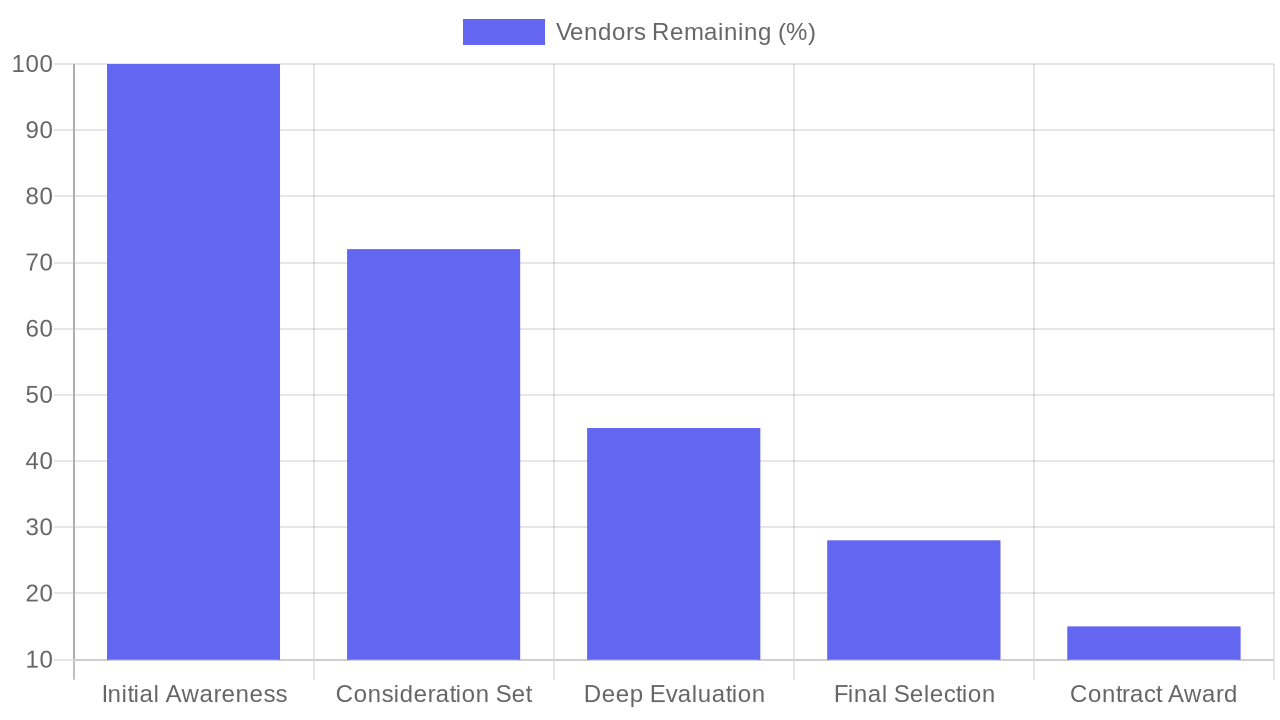
The market gap lies in understanding selection as an active filtering process, not a passive consequence of awareness. Most content treats visibility and selection as sequential, first you're seen, then you're chosen. Reality is more brutal: visibility determines whether you enter the consideration set, but selection operates through independent evaluation criteria that can disqualify even the most visible player. A study published in the Journal of Marketing Research found that 68 percent of enterprise buyers eliminate vendors during selection despite recognizing their brand, citing misalignment on implementation risk, cultural fit, or feature priorities. Yet almost no visibility-focused content addresses how to influence the selection filters themselves, demonstrating relevant case studies, aligning with buyer risk profiles, or positioning against specific competitive weaknesses. The underreported angle is that competitors often win not by outspending on visibility but by shaping the selection criteria in their favor through advisory relationships, analyst briefings, and reference architecture. Organizations pouring budget into top-of-funnel awareness without mapping to selection-stage decision factors are optimizing for the wrong outcome. The gap between being shortlisted and being selected is where deals are won or lost, yet it remains the least analyzed phase of the buyer journey.
Visibility vs Selection: Where Buyers Drop Vendors

Visibility vs Selection: Where Buyers Drop Vendors

Percentage of enterprise buyers who eliminate visible vendors at each stage of the selection process

The Reality Versus Perception Gap

The market perceives visibility as a proxy for credibility and selection readiness. In reality, visibility signals only that a vendor has invested in marketing, not that they deliver superior outcomes. According to Forrester Research, 74 percent of B2B buyers conduct most of their research independently, consulting peer reviews, case studies, and third-party analyst reports rather than vendor-controlled content. The perception gap widens because vendors confuse share of voice with share of trust. Being mentioned frequently in search results or social feeds does not mean buyers believe your claims or view you as lower-risk than alternatives. A Gartner survey found that enterprise buyers require an average of 27 touchpoints before making a purchase decision, but only 6 of those touchpoints involve direct vendor engagement, the rest are peer conversations, analyst briefings, and independent validation. Visibility gets you into those 6 touchpoints; the other 21 are driven by reputation, third-party endorsement, and demonstrated proof. Organizations that treat visibility and selection as the same variable systematically overspend on awareness and underspend on proof creation, reference development, and influencer relations.

Visibility Drivers vs Selection Drivers: Key Differences

DimensionVisibility Drivers
Illustration of Overview related to Why Visibility Doesn't Guarantee Selection: The AI Perception War

Key ideas

style="padding:14px 18px;background:#1A1C2C;color:#fff;font-weight:700;text-transform:uppercase;text-align:left;font-size:0.8125rem;letter-spacing:0.02em;border:none;">Selection DriversPrimary GoalAwareness and reachTrust and differentiationKey MetricsImpressions, traffic, share of voiceReference quality, proof points, risk mitigationChannel FocusSEO, paid media, social presenceAnalyst relations, peer networks, case studiesInvestment TypeMarketing budget, content productionCustomer success, advisory relationships, validationTime HorizonShort-term campaignsLong-term reputation buildingCompetitive AdvantageTemporary and easily copiedDurable and relationship-driven

Why This Matters for Business Leaders

For executives, the visibility-selection gap represents a strategic resource allocation problem. Companies that conflate the two waste budget on channels that generate attention without conversion. A McKinsey analysis found that high-performing B2B organizations allocate 40 percent of their marketing investment to selection-stage enablement, equipping sales teams with proof, training channel partners on differentiation, and co-creating validation content with customers, compared to 18 percent among laggards. The business impact is measurable: companies with strong selection enablement close deals 1.7 times faster and win 22 percent more competitive evaluations. Yet most marketing dashboards track visibility metrics, website visits, ad impressions, social engagement, with minimal instrumentation of selection influence. Leaders must ask: are we visible to the right buyers, and do those buyers have the evidence they need to choose us over alternatives? Visibility without selection enablement creates expensive pipelines that leak at the decision stage. The fix requires shifting investment from broadcast channels to trust-building mechanisms and aligning marketing success metrics with selection outcomes, not just awareness lift.

Who Wins in the Visibility-Selection Game

The winners are organizations that treat selection as a distinct competency requiring different capabilities than visibility. Salesforce dominates not because it has the highest ad spend but because it has built the most robust ecosystem of certified consultants, user communities, and reference customers who actively advocate during buyer selection processes. Similarly, Amazon Web Services invests heavily in case study production, solution architecture templates, and migration playbooks that reduce perceived implementation risk, directly addressing selection-stage concerns. These companies understand that visibility creates deal flow; selection capabilities determine win rates. Conversely, vendors with high visibility but weak selection assets, unclear differentiation, thin proof libraries, limited reference access, suffer from high pipeline volume but low conversion. The competitive angle is counterintuitive: sometimes reducing visibility spend to reinvest in selection enablement improves overall revenue efficiency. A SiriusDecisions study showed that companies optimizing for selection influence achieve 30 percent higher revenue per marketing dollar than those optimizing for reach. The strategic lesson is that selection is won in the invisible work, customer advisory boards, analyst relations, proof point development, that never appears in a visibility report.

Risks and Weaknesses of Overinvesting in Visibility
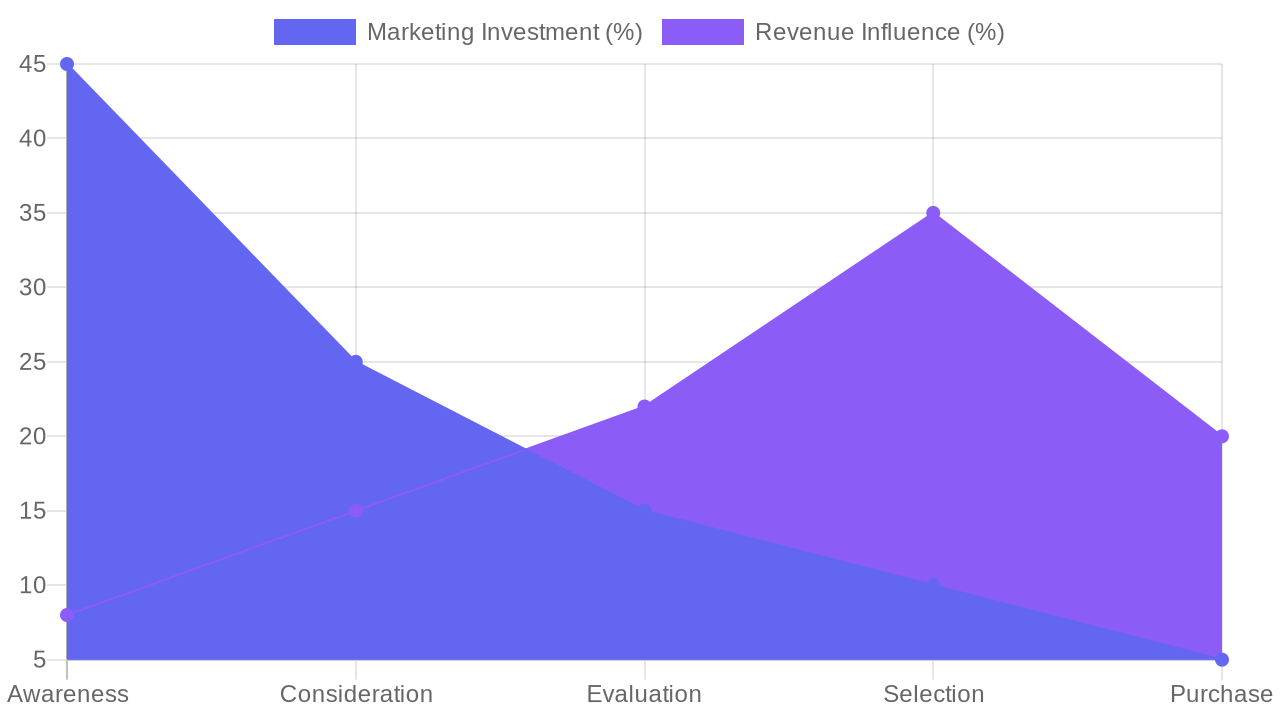
Overinvesting in visibility creates several hidden risks. First, it trains internal teams to measure success by the wrong metrics, celebrating traffic spikes and social mentions while ignoring conversion rates and win-loss ratios. This misalignment leads to strategic drift, where marketing and sales operate on different success definitions. Second, high visibility without corresponding substance damages credibility when buyers investigate and find weak proof points or contradictory reviews. A Trustpilot analysis found that 89 percent of consumers read reviews before purchasing, and negative reviews have 2.5 times the impact of positive visibility. Third, visibility arms races are expensive and non-differentiating, competitors can match ad spend and SEO tactics within quarters, but building deep customer relationships and validation ecosystems takes years. Organizations that rely on visibility as their primary go-to-market motion become vulnerable to competitors who invest in selection-layer influence. Finally, visibility focus often neglects dark funnel channels, peer networks, private communities, analyst inquiries, where actual selection decisions crystallize. Gartner estimates that 83 percent of the enterprise buying journey happens outside vendor view, meaning visibility-centric strategies miss the majority of selection influence opportunities.
Marketing Investment vs Revenue Impact by Stage

Marketing Investment vs Revenue Impact by Stage

Average marketing budget allocation compared to revenue influence at each buyer journey stage

What Will Happen Next: The Selection Intelligence Era

The visibility-selection gap will widen as AI assistants and search engines increasingly serve curated answers rather than lists of visible options. When ChatGPT or Perplexity recommends a single vendor instead of offering ten search results, selection happens at the algorithm layer, not the buyer layer. Organizations that have invested only in visibility will find themselves excluded from AI-generated recommendations, which prioritize signals like citation quality, domain authority, and third-party validation over paid placement. A Gartner prediction states that by 2026, 75 percent of B2B sales organizations will augment traditional sales playbooks with AI-guided selling, meaning selection criteria will become more data-driven and less influenced by visibility tactics. The strategic shift will favor companies that have built structured proof libraries, earned authoritative backlinks, and cultivated relationships with the analysts and platforms that train AI models. Forward-looking organizations are already mapping their selection enablement to AI discoverability, ensuring case studies are schema-marked, thought leadership is cited in academic and industry publications, and customer evidence is accessible to web crawlers. The next frontier is selection intelligence: using AI to analyze win-loss patterns, predict buyer risk profiles, and dynamically generate proof content that addresses specific selection criteria. Companies that continue optimizing for visibility while ignoring selection mechanics will become the cautionary tales of the AI-mediated buying era.

Unique Metric: The Selection Conversion Score

To bridge the visibility-selection gap, leading organizations now track a Selection Conversion Score (SCS), the percentage of visible opportunities that convert to shortlist inclusion, and from shortlist to contract award. An SCS below 15 percent indicates that visibility is generating awareness but not trust; the organization is seen but not chosen. Top-performing vendors maintain SCS rates above 35 percent by aligning every visibility investment with a corresponding selection asset: every webinar paired with a case study, every ad campaign supported by reference access, every thought leadership piece backed by data validation. The metric forces accountability across marketing and sales, visibility teams must demonstrate that their efforts translate to qualified pipeline, while sales must convert that pipeline at rates that justify the investment. Companies using SCS as a primary KPI reallocate budget from low-conversion visibility channels to high-impact selection enablers, resulting in lower customer acquisition costs and higher win rates. The discipline of measuring selection conversion transforms visibility from a vanity exercise into a strategic growth lever.

Optimizing for Selection: Actionable Investment Shifts

<th

Analysis

style="padding:14px 18px;background:#1A1C2C;color:#fff;font-weight:700;text-transform:uppercase;text-align:left;font-size:0.8125rem;letter-spacing:0.02em;border:none;">Current Visibility InvestmentRecommended Selection InvestmentExpected ImpactGeneric SEO contentBuyer-journey-specific proof content (case studies, ROI calculators)Higher shortlist inclusionPaid search and display adsAnalyst relations and third-party validation programsImproved trust and credibilitySocial media engagementCustomer advisory boards and reference programsStronger peer recommendationsWebinars and eventsSolution architecture templates and implementation playbooksReduced perceived riskBrand awareness campaignsCompetitive differentiation assets and battle cardsHigher win rates in competitive deals

Turning Visibility Into Selection: A Strategic Roadmap

Organizations ready to close the visibility-selection gap should follow a three-phase roadmap. First, audit current visibility investments against selection outcomes, identify which channels generate shortlist inclusion and which produce only top-of-funnel traffic. Use win-loss analysis to determine what evidence buyers required during selection that was missing or unconvincing. Second, build a selection enablement engine: create a library of proof content mapped to buyer concerns, develop reference customer programs with tiered access, and establish relationships with industry analysts who influence enterprise selection. Equip sales teams with differentiation narratives and competitive intelligence that address selection-stage questions. Third, realign success metrics to track selection influence, measure not just leads generated but deals progressed, shortlist win rates, and time-to-close. Forrester research shows that organizations with tight alignment between visibility and selection enablement grow revenue 32 percent faster than peers. The shift requires cultural change: marketers must accept accountability for pipeline quality, not just volume, and sales must contribute to proof creation by documenting customer success. The payoff is a go-to-market motion where visibility and selection reinforce each other, every piece of visible content builds trust, and every selection asset amplifies reach through word-of-mouth and referenceability.

FAQ: Visibility and Selection

Q: Can a company succeed with low visibility but strong selection capabilities?
A: Yes, particularly in enterprise and specialized markets where buyers rely on peer networks and analyst recommendations rather than public visibility. Many successful B2B vendors grow through reference selling and advisor relationships with minimal digital presence. However, visibility amplifies selection success by expanding the pool of opportunities.
Q: How do I measure whether my visibility investments are translating to selection?
A: Track the Selection Conversion Score, the percentage of visible leads that reach shortlist stage and convert to closed deals. Also monitor attribution of closed revenue to specific visibility channels and run win-loss interviews to identify which proof points influenced final decisions.
Q: What is the most common mistake companies make when trying to improve selection rates?
A: Treating selection as a sales problem rather than a proof problem. Organizations often ask sales teams to close harder when the real issue is lack of credible evidence, weak differentiation, or missing validation from trusted third parties. Selection is won before the sales call through strategic enablement.
Q: Are there industries where visibility matters more than selection capabilities?
A: In consumer and transactional B2C markets, visibility often directly drives purchase because selection criteria are simpler and lower-risk. But in B2B, professional services, and enterprise software, selection always involves multiple stakeholders and evaluation criteria that visibility alone cannot satisfy.
Q: How will AI assistants change the visibility-selection dynamic?
A: AI assistants compress the buyer journey by delivering curated recommendations instead of search result lists, meaning selection happens algorithmically based on authority signals, citation quality, and validation rather than paid visibility. Companies must optimize for being recommended, not just being found.

Conclusion: Visibility Opens Doors - Selection Wins Deals

The uncomfortable truth for modern marketers is that visibility has become a commodity while selection remains a craft. Every competitor can buy traffic and boost social presence, but few can build the trust architecture that turns awareness into preference. The organizations that thrive in the next decade will master both, using visibility to enter conversations and selection enablement to win them. This requires rethinking marketing ROI, reallocating investment from broadcast to proof, and aligning success metrics with revenue outcomes rather than vanity metrics. For leaders ready to close the gap, the opportunity is significant: higher win rates, faster sales cycles, and more efficient customer acquisition. The era of visibility as competitive advantage is over. The era of selection intelligence has begun. Companies that understand this shift will capture disproportionate value; those that cling to visibility-first strategies will wonder why their pipelines generate activity but not revenue. To explore how your organization's visibility translates to selection influence and identify strategic gaps, consider a deeper analysis of your buyer journey and proof ecosystem. The difference between being seen and being chosen is measurable, and it determines whether your visibility investments generate returns or just noise.
  • ChatGPT - OpenAI Conversational AIExternal
  • Gemini - Google AI AssistantExternal
  • HubSpot - Marketing Statistics and TrendsExternal
  • Gartner - Marketing Research and InsightsExternal
  • Harvard Business Review - How B2B Buyers Make Purchasing DecisionsExternal
  • MIT Sloan - Why Companies Lose Sales Despite High VisibilityExternal
  • Journal of Marketing Research - Vendor Elimination StudyExternal
  • Forrester - B2B Buyers Ignore Vendor MarketingExternal
  • Gartner - B2B Buying Journey SurveyExternal
  • McKinsey - The New B2B Growth EquationExternal
  • Salesforce - State of Marketing Research ReportExternal
  • Amazon Web Services - Customer Case StudiesExternal
  • Forrester - The B2B Revenue WaterfallExternal
  • Trustpilot - Online Reviews StatisticsExternal
  • OpenAI Blog - ChatGPT AnnouncementExternal
  • Perplexity AI - Conversational SearchExternal
  • Gartner - 75% of B2B Sales Organizations Will Augment with AI by 2026External
  • Forrester - Close the Gap Between Marketing and SalesExternal
This analysis is based on publicly available data, third-party research, and GeoRepute's proprietary analytical models. It does not represent verified or audited measurements and should be interpreted as directional insights rather than definitive factual claims.
Illustration of Analysis related to Why Visibility Doesn't Guarantee Selection: The AI Perception War

Get Your GEON Score

See how visible and authoritative your business is across AI and search systems.

Continue reading

A stream of recent insights - hover to pause, or scroll when motion is reduced.

Lead image for "What Is Data Science? The Reality Behind the Hype".
Strategy & Control

What Is Data Science? The Reality Behind the Hype

Lead image for "What Is Business and How Can You Boost It? A Strategic Guide Beyond the Basics".
Strategy & Control

What Is Business and How Can You Boost It? A Strategic Guide Beyond the Basics

Lead image for "How to Build AI Authority: The System Behind Brands AI Trusts and Recommends".
AI Visibility

How to Build AI Authority: The System Behind Brands AI Trusts and Recommends

Lead image for "How AI Rewrites Market Leaders".
Market & Competition

How AI Rewrites Market Leaders

Lead image for "The Psychology Behind Trust Online: Why Perception Decides Before You Do".
Digital Perception

The Psychology Behind Trust Online: Why Perception Decides Before You Do

Lead image for "How AI Shapes Public Opinion: The Mechanics of AI Influence on Perception".
Digital Perception

How AI Shapes Public Opinion: The Mechanics of AI Influence on Perception

Lead image for "Reputation vs Visibility: Why Being Known Isn't the Same as Being Found".
Digital Perception

Reputation vs Visibility: Why Being Known Isn't the Same as Being Found

Lead image for "Before/After AI Visibility Transformation: The New Standard for Digital Presence".
Case Analysis

Before/After AI Visibility Transformation: The New Standard for Digital Presence

Lead image for "Executing an AI-Driven Campaign: The Perception-First Blueprint".
Case Analysis

Executing an AI-Driven Campaign: The Perception-First Blueprint

Lead image for "How Startups Win with AI: Mastering the AI Visibility Gap".
Case Analysis

How Startups Win with AI: Mastering the AI Visibility Gap

Lead image for "McDonald's Global Consistency: The AI-Driven Challenge to Brand Uniformity".
Case Analysis

McDonald's Global Consistency: The AI-Driven Challenge to Brand Uniformity

Lead image for "Airbnb's Trust Strategy in the AI Era: Beyond Traditional Airbnb Marketing".
Case Analysis

Airbnb's Trust Strategy in the AI Era: Beyond Traditional Airbnb Marketing

Lead image for "What Is Data Science? The Reality Behind the Hype".
Strategy & Control

What Is Data Science? The Reality Behind the Hype

Lead image for "What Is Business and How Can You Boost It? A Strategic Guide Beyond the Basics".
Strategy & Control

What Is Business and How Can You Boost It? A Strategic Guide Beyond the Basics

Lead image for "How to Build AI Authority: The System Behind Brands AI Trusts and Recommends".
AI Visibility

How to Build AI Authority: The System Behind Brands AI Trusts and Recommends

Lead image for "How AI Rewrites Market Leaders".
Market & Competition

How AI Rewrites Market Leaders

Lead image for "The Psychology Behind Trust Online: Why Perception Decides Before You Do".
Digital Perception

The Psychology Behind Trust Online: Why Perception Decides Before You Do

Lead image for "How AI Shapes Public Opinion: The Mechanics of AI Influence on Perception".
Digital Perception

How AI Shapes Public Opinion: The Mechanics of AI Influence on Perception

Lead image for "Reputation vs Visibility: Why Being Known Isn't the Same as Being Found".
Digital Perception

Reputation vs Visibility: Why Being Known Isn't the Same as Being Found

Lead image for "Before/After AI Visibility Transformation: The New Standard for Digital Presence".
Case Analysis

Before/After AI Visibility Transformation: The New Standard for Digital Presence

Lead image for "Executing an AI-Driven Campaign: The Perception-First Blueprint".
Case Analysis

Executing an AI-Driven Campaign: The Perception-First Blueprint

Lead image for "How Startups Win with AI: Mastering the AI Visibility Gap".
Case Analysis

How Startups Win with AI: Mastering the AI Visibility Gap

Lead image for "McDonald's Global Consistency: The AI-Driven Challenge to Brand Uniformity".
Case Analysis

McDonald's Global Consistency: The AI-Driven Challenge to Brand Uniformity

Lead image for "Airbnb's Trust Strategy in the AI Era: Beyond Traditional Airbnb Marketing".
Case Analysis

Airbnb's Trust Strategy in the AI Era: Beyond Traditional Airbnb Marketing